
July 31, 2008
July 25, 2008
May 29, 2008
Notes on Joseph
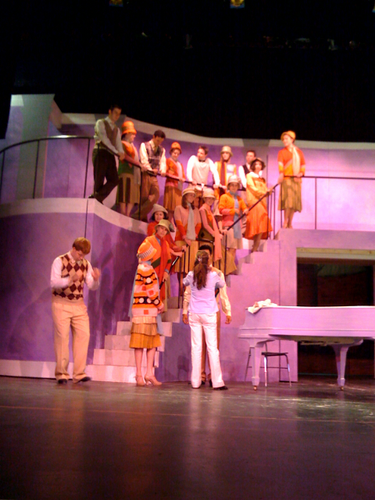
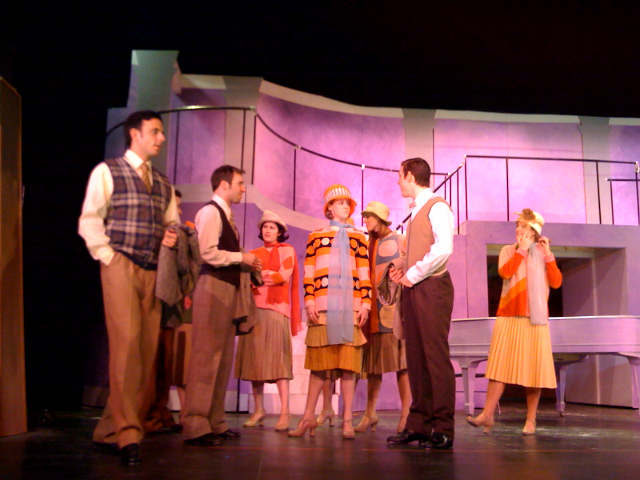
 See, I’m making a blog post now because something is happening. As you can see from this ridiculous photo of me wearing an amazing technicolor dreamcoat, I’ve begun my fourth summer as PSM of The Reagle Players in Waltham, MA. Last year I did a whole fancy mini-blog about the whole season. I don’t think I’m going to be quite as detailed this year, as it would just be more of the same, but I will post my thoughts as they come.
Some observations about our production of Joseph:
It’s a very weird show to rehearse. There are only four principals, first of all: Joseph, the Narrator, Jacob/Potiphar, and the Pharaoh. Then we have the 11 brothers and their 11 wives. Oh, and the 53 children in the choir, but that’s another story. Another thing we’ve been realizing is that the principals don’t actually do as much as you’d think. The story is structured as a narrative, and what really happens is that the chorus is really moving the story along while the principals interject their parts. It doesn’t really seem like that in the finished product, but it’s basically impossible to rehearse for very long without involving the chorus. It’s been a bit of a challenge to not have the principals sitting idle, because there’s very little they can work on while the chorus is learning something else. It doesn’t help that our principals are very quick learners, and some of them have played their roles on tour, so the little they can work on doesn’t even need much rehearsal.
Things are going really well. The whole cast is both talented and nice, which always makes me really nervous, because that never happens and I’m always wondering when the problems are going to arrive, but so far so good. Everyone seems to be having a great time. It’s a very fun show, so that may be helping as well. I’m really enjoying it because it’s one of the shows I grew up knowing every word of. Aside from Phantom, this is the first time I’ve done one of those shows that was such a part of my childhood. Some other people in the company also said that they had a similar experience with the show. We’ve decided that those of us that memorized all the colors in Joseph’s coat at the age of 12 are biologically more disposed to remember them than those who are trying to learn them now as adults.
Reagle has done the show twice before, although apparently we’re among the first (if not the first) company to do a new version of the show licensed by R&H. I hate hate hate the way the score is printed. First of all, since the show is through-sung, we didn’t get scripts, just scores. Step 1 was to make a copy reduced to 80% and stuck in the upper-left side of the page so I have room to write blocking and other notes. To make matters worse, it’s got the lyrics written so that multiple verses are written to the same bars of music (i.e. it wraps back around and you read the second line of lyrics the second time.) That’s all well and good for a lot of purposes, but I think it’s going to be a disaster to call a show that way. If the show were going to run forever the solution would be to duplicate the pages and white out the lyrics and cut and paste as needed to make it read in a linear fashion, but for 8 performances I’m trying to avoid that. I think it will depend how many cues I have in a specific section, and if I have to clean it up some other way I will. But it definitely looks like I’ll have to be following the score the whole time, which reduces the amount of time I can look up at the stage. Basically I’m in denial about the whole issue until I see what a mess it is at the paper tech. I may try to schedule the paper tech a day or two early since all the cues exist from the previous production.
One other issue we’re dealing with is that due to other events happening on our stage, we don’t get the deck until the night before tech. It happens sometimes. It happens on every Broadway show, but in our limited rehearsal time it certainly helps to have done it on stage before tech. It also makes the cast feel good to have done a run-through on stage before tech starts, so they can see the big picture before we get bogged down in the details for two days. Due to the 53 children, we’re thinking spacing may take most of our time and we may not get a run that night.
Stay tuned for more!
April 28, 2008
Thank You, Bootleggers
 I have two things to tell you:
The first begins in the stage management office of The Phantom of the Opera, a few short hours ago. We were talking about songs about months of the year, which after exhausting May, led to June, which of course led to “June is Bustin’ Out All Over.” This subject invariably leads to someone mentioning the infamous clip of Leslie Uggams performing said song at some event in Washington, DC and completely and utterly going up on the lyrics. It’s one of the most famous theatre-related moving pictures ever, it seems. We all got a good laugh just at the thought of it, so I swung around in my chair and headed over to YouTube so we could all enjoy it. But IT’S GONE!!! We searched under several different names and phrases. We did a Google search, which only led to broken links of YouTube videos that have been removed. If anyone reading this can point me to a working link for this video, many people in the Phantom company will be grateful. Bonus points if it’s the one with the subtitles speculating on what she might be trying to say.
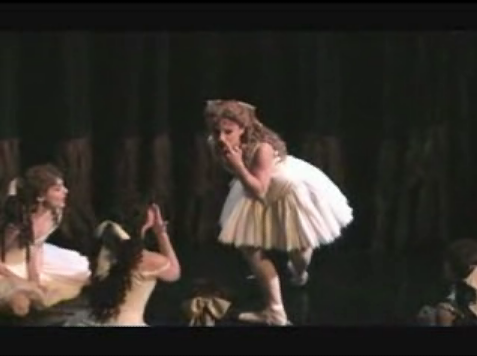
After our disappointing failure, someone who had popped their head in at the prospect of seeing Leslie Uggams mentioned that on YouTube there was allegedly a video of the performance of Phantom where a certain Joseph Buquet had missed his entrance in “Magical Lasso”, and Meg (Heather McFadden) jumped up and sang the whole song. We found it quickly, and soon the halls of the Majestic were echoing with screams, laughter, and applause at this miraculously preserved moment in theatre history. Embedding is disabled so you will have to click the link to go directly to the page, but it’s well worth it!
http://www.youtube.com/watch?v=hrzAKtZxK44
Heather is my new hero. Sally Williams is the Madame Giry, who is mostly holding herself together, even under the scrutiny of a close-up.
April 4, 2008
Flashlight Discoveries
This is a recap of some stuff I discovered, mainly while working on Frankenstein.
 Being a stage manager, I’m naturally somewhat obsessed with flashlights, and at some point earlier in my career when searching for new toys, stumbled on the site photonlight.com. I had purchased a Photon Microlight II much earlier, at Eastern Mountain Sports or one of those places, and wore it on a chain around my neck as an all-purpose last-resort flashlight that would always be on my person. I considered it a step up from a bite light, as it had a pushbutton for momentary use, and a tiny switch so it could be left on. Thus, you could hold it in your teeth or in your hand, but without the need to actually bite on it or squeeze it to make it work. This was all well and good until I discovered the rich variety of small LED lights they sell online.
Specifically, the Photon Freedom Micro. It’s insane. It does all sorts of complicated things with only one button, I don’t even remember how to use them all.
The ones that I use:
1. Press the button, the light comes on. Press again to turn it off. Simple enough.
2. If you’re like me, and reading Howard McGillin’s crossword puzzle while stuck for 10 minutes on a bridge over the stage of the Majestic Theatre, you might not want to turn the light on to its full power, even when using a colored LED. If the light is off, simply hold down the button. This will slowly increase the brightness from nothing, and when you let go it stops at that level. So if you want only a teeny-tiny amount of light, let go as soon as it starts to light up. It’s awesome. It also works in reverse, if the light is on and you hold down the button, it dims until you let go. Once you turn it off it will return to full brightness next time you press the button.
3. It can also do crazy things like flash at different rates, or even automatically flash SOS over and over.
Next comes the ability to customize your light. For the housing there are obvious colors like black and various camo shades, but you can also get it in more funky colors. The one I use for the stage is the black covert housing, which has a little plastic hood that covers the sides of the LED, so you can only see the light when it’s pointed right at you, and the beam doesn’t spill all over the place. I have a second light with a white LED, which I keep on my keychain for general illumination, and that’s in the “fashion blue” color, just because it looks cool.
Then you get to choose the color of the LED, which offers a wide variety of choices. It should be noted that not all the colors are available with all body styles. You may have to get black or camo to get the color LED you want. The full list of colors are: white, red, orange, yellow, green, turquoise, purple, and for a few dollars more, you can even get IR or UV light. I went with turquoise for mine, because it has night vision properties, but it’s not as dark as blue, so it gives more natural illumination. I am completely opposed to using red-gelled flashlights onstage. Unless perhaps you’re doing Sweeney Todd, if the red spills anywhere that the audience can see it, it will stick out like a sore thumb, whereas shades of blue will probably blend in with your lighting better. So I’ve been really happy with the turquoise color.
Finally, you get some accessories in the box. I didn’t think much of these, since I was accustomed to using the small keychain ring on the old one to wear it on a chain around my neck. The Freedom comes with two clip accessories that the light can pop into. The first has a simple loop on it to be used on a lanyard or anywhere else you might want to tie a string through it. I still use this through the chain around my neck, but now with the advantage that I can pop it off at a moment’s notice to point it at something far away from my neck, or (gasp!) let someone else borrow it. And despite my initial fears, I have never had it pop out of the clip unexpectedly.
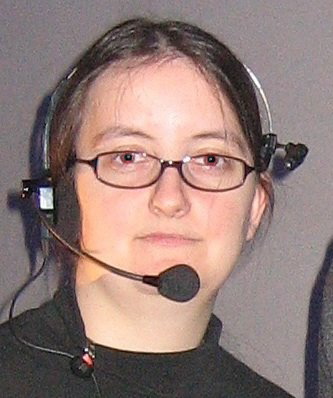
 The other accessory is this amazing device that has an alligator clip with a magnetic base, so you can either clip it or magnetically attach it to something, and the light is held on a swivel so you can aim it wherever you want. As you can see the guy in the picture is wearing it on his hat. This summer I didn’t have a bedside lamp at the apartment I was staying at, so I stuck mine to the metal bedpost and used it as a reading light. But the moment that changed my life was when we started tech for Frankenstein and I attempted to clip it to my headset, on the side of the not-covered ear. I had one of the really lightweight Clearcom headsets, and the clip jiggled around on the thin metal band. I rolled a thin strip of gaff tape around the band until it was just thick enough for the clip to hold firmly, and there it remained until the show closed. Words cannot express how helpful that clip was. I was wearing way too many hats on that show, and the ability to turn on the light with one press and then be able to work handsfree was amazing. Thanks to the ability to turn the light at any angle, I could give it a quick twist and have it point exactly where I was looking, or at a different angle, so my head could be looking down at the cue light while the light was aimed up at the tape marks on the ropes I was pulling. The other cool thing was that because of the clip-in holders, at the end of the show I was able to easily pop the light out of the holder on my headset and place it back in the holder around my neck, so I didn’t have to leave it at the theatre.
Surefire
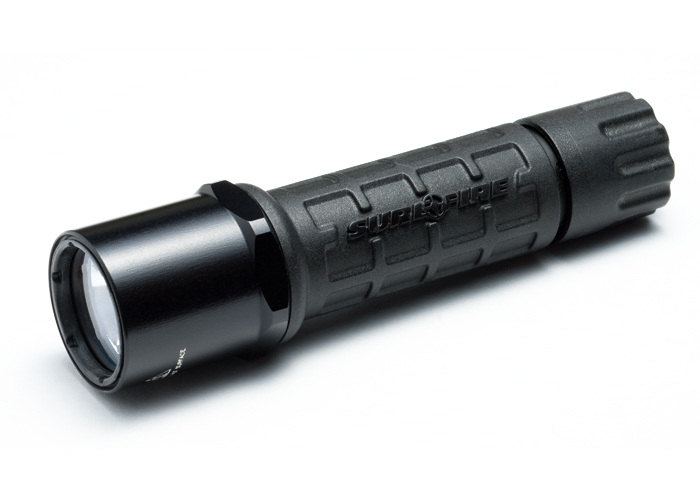 Because I’m obsessed with flashlights, I often use two during a performance — one for when a small amount of light is needed, and one for when I need a lot of light. My light of choice for the “a lot of light” category has always been the Surefire 6P. It’s reeeeeaaaalllly bright. With a Xenon bulb the battery life is pretty terrible (something like 1 hour), and the camera batteries it takes can be expensive, even when purchased in bulk. I noticed on Frankenstein that my batteries for both flashlights were running out too quickly for my tastes. I was getting less than two weeks out of the Surefire, and this distressed me, especially since I wasn’t even using it for the vast majority of my cues. I was bitching about it one night on headset, when our electrician mentioned that she had an LED Surefire, and it got much better battery life. I wasn’t even aware that Surefire had made an LED equivalent of the 6P, and I doubted it could come anywhere near the brightness of the Xenon bulb. She assured me that it was at least bright enough to see into a grid, and offered to let me play with it. A few days later I stood on the stage with my 6P and hers (which is called the G2), and shone both of them around the theatre — up to the balcony, into dark corners, etc. What I found when comparing them against a spot in the back of the balcony was that the G2 exhibits that weird murky gray-blue quality that all white LEDs have, and that the 6P was more naturally picking up the vibrant colors of the walls and doors, etc. But while the 6P was more pleasing to the eyes, the G2 was illuminating the same area well enough, and the tradeoff for better battery life seemed worth it. I ordered a G2 the next day.
The other fun thing about having a Surefire is that we had a little bit of a shadow play at one point in the show, and during understudy rehearsals I would stand behind our “Creature” and hold the Surefire next to the instrument that would be illuminating him, and the beam was strong enough even under worklight to allow him, the PSM and dance captain sitting in the house to see the shadows and work on his performance of them. You can’t do that with a maglite.
I should also mention that I also have the flip-off blue filter for the Surefire. Mine is the older style, from my 6P, but I found with some elbow grease it fit on the G2 as well. Most of the time when I use the flashlight during performance, it’s with the filter on.
Batteries
Since all my batteries had been sucked up by the show, I placed a bulk battery order at the same time as I ordered the G2. When my Photon light would die, it was a tragedy. Radio shack charged something like $6 for each watch battery, of which I needed two. Twelve dollars in batteries for that tiny little light, it was almost as expensive as buying the batteries for the Surefire at retail. So I ordered a bunch of the lithium batteries for the Surefire, and also found that I could get the same watch batteries for the Photon that I bought for $6 at Radio Shack, for 51 cents!!! Needless to say I ordered a ton of them. I found the G2, and the batteries at Brightguy.com.
I hope you’ll find these products as useful as I did. I was so excited the day the order from Brightguy arrived at the theatre, I stabbed myself with my Leatherman while trying to pry off the battery door on the Photon light. I recommend the small screwdriver tip for that now, not the point of the huge freakin’ razor-sharp blade.
And finally, frequent readers will know I hate posting pictures of myself, but I feel this really requires an illustration of the headset mounting trick for the Photon light, and it so happens the only pictures of it I have include my head within the headset, so here you go:
March 7, 2008
It’s 29 Hours. What Could Possibly Go Wrong?
My Views on Small Gigs
After several weeks of unemployment, I have a little job. Actually, even Equity admits that a stage reading does not constitute “employment.” What they mean by that is, if you’re doing a show that allows you to miss rehearsal due to other employment in the industry, this is not a good enough excuse. But also, a week of work for $100 isn’t really a job. Still, I much prefer doing a reading to a showcase, as I recently turned down a 6-week showcase, even though it would have paid $600. My philosophy about jobs in theatre that don’t pay actual money is that if I’m not doing anything, I can dedicate a week of my life to meeting some new collaborators, learning a new show that might have a future, working with well-known actors I admire, and putting my full effort into making a 1-page contact sheet, putting together 29 hours of schedule, and helping them to coordinate the moving of music stands and chairs around a bare stage. I might even take the house lights up and down for the actual readings.
Contrast that to a showcase, which despite its name and original intentions, is a full production with a full design team, essentially a full-time job for usually six weeks, culminating in an actual production which needs to be loaded in, teched, and loaded out. And it still usually pays only $100 a week (if you can get it — that’s seldom the original offer). Not to mention for someone like me who subs on Broadway and Off-, I could lose far more money in lost sub work than I make doing the entire run of the Showcase. It’s happened to me several times. And lest that sound like it’s all about the money, let’s remember that if I’m taking a Showcase it means I don’t have a job. So yes, at least until the rent is accounted for, it has to be at least partially about the money. Personally I feel I’m making more art in the 8,125th running of the Phantom Overture than in many showcases I’ve done, so I actually feel no guilt about the art either.
But back to the reading. I don’t mean the title to sound like it’s going badly. It’s not at all. It’s actually something I’ve said many times, in fact to the director of this one when we first met for coffee. It really is my philosophy about doing readings. When you take a show, you don’t know if it’s going to be a good experience or a bad one, if it will go somewhere or be forgotten about forever, or if the people you meet will lead you to bigger jobs, or never call you again. In my opinion, if the show turns out to be a bad experience, there are two ways to rationalize getting out of bed in the morning: either they’re paying you a fair wage, or it will all be over soon. This is why showcases are bad — they satisfy neither criteria, so if you’re not having fun, you’re screwed.
I truly believe the process of putting eleven actors standing at music stands for 29 hours can’t possibly create the kind of unpleasantness that would make it not worth the risk. Thus, I took the job, no questions asked. We start rehearsal tomorrow, and so far I like the director, who I’ve met, I like the composer and musical director who I’ve gotten to know quite well via e-mail, and I like the cast — one of whom I’ve worked with and am thrilled to be working with again, one of whom I’ve spoken to on the phone, and the rest through e-mail. I’m excited to start meeting people and get to work.
The other great thing about this job is, as I said in an earlier post, I’ve missed being a PSM for the last six months or so. A reading doesn’t allow for the full use of PSM skills, but I’m hoping it will be enough to tide me over until summer, when I will have more responsibility than anyone could ever want, as PSM of a summer stock season.
I will share one other thing I’ve learned from being unemployed for the first time in about a year. Having a week or more to myself has reminded me how valuable my time is. I am an only child, I learned at an early age how to entertain myself. I am not bored at all. If I could be paid to do nothing forever, I would never leave my apartment. So I feel no desire to take a so-called “job” just for the sake of having one, if the money offered is not remotely worth the value of my time. I believe I provide Broadway-quality stage management to every show I do, big or small. That doesn’t mean I expect every employer to be able to pay me $1,500 a week, or anywhere near that. I know how much money I need to live, which is not much by New York standards, and I need health insurance, and I will never turn down work that meets those two requirements. But for anything below that I realize now that the only reason to take such a job would be if I wanted to. For whatever reason — believe in the show, want to work with one of the actors, like the director, trying to get in with the producer. There has to be a reason I want it, so badly that I’d rather do the show than sit comfortably at home doing something else. And in the last month I’ve learned that there’s nothing wrong with saying no to working your ass off when there’s little or nothing to be gained. In no other industry would anyone be made to feel guilty over such a decision. Should I call up an accountant and ask him to do my taxes for $5 in his spare time at night? If he tells me he’s actually quite busy watching American Idol, do I have a right to question his devotion to developing his accounting skills?
Now that I’m spending some time back at the bottom of the industry, just wanted to share the view. It’s easy to forget when you get used to a weekly paycheck.
March 4, 2008
Sometimes Apple Scares Me
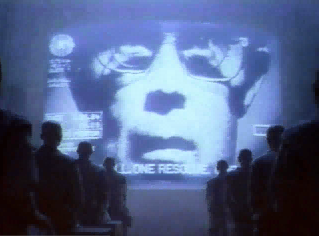 But in that way that you can’t even worry about your privacy because it’s just so damn cool.
Hey, two posts in one day! I have to tell you what just happened to me.
I’m doing this reading next week, so I’m in preproduction. I have some contact info for the cast and creative team, so I’m starting to enter it into Apple’s Address Book app. I’m using the cool new feature that Mail has in Leopard where it detects phone numbers and e-mail addresses in your mail and offers to add them to your address book. Since the only contact info I have is in plain text in an e-mail from the director, this saves me a lot of retyping or cutting and pasting. The system is not perfect by any means, but it’s still a time saver.
So I get to this one actor, who is a Broadway actor that I’ve vaguely heard of, but one I’m sure I’ve never met. I create a contact in my address book based on his e-mail address, and when I later go back to sort my contacts, I find that the guy’s headshot has been added in the photo slot of his contact file! I then see that his e-mail is from a dot Mac account, which no doubt somehow explains this. I’m not sure if this is a feature you have to opt in for, but what I’m guessing is happening is that Address Book automatically matches @mac.com e-mail addresses to the person’s account and their own address card. It hasn’t filled in any other personal information though, as I’m still lacking his phone number (this is definitely a good thing, for privacy reasons). Maybe it just does the picture. I will post an update if I find out more about how this is done.
UPDATE: Found out how it’s done. A quick search on MacNN solves all.
If you have a .Mac account you can go to the webmail page (webmail.mac.com) and click on preferences (upper right of your mailbox area). In the “Composing” tab, there is a place where you can add your photo. Presumably from there all Mac users will see this photo when they read your e-mails in Mail or they enter your e-mail address in their Address Book. I didn’t have a photo set, but obviously I need to add one now. Will it look unprofessional if I use my default iChat icon?

January 12, 2008
I’m Not Dead
 I got called out by a friend of mine the other night — “The Go Button, not updated so much, hmmm?”
Yeah. It’s actually really embarrassing that it’s January and I haven’t updated since November. I’ve been busy, and to be honest, the Facebook epidemic swept through the Frankenstein company and took up most of my webpage-updating energy for a while.
Frankenstein has now been closed for a month, and I’m currently working on an adorable new musical called Wanda’s World, which is billed as “a musical for the ‘tween in all of us.” The site appears to be down at the moment, but here’s the tickets page. Anyway it’s a very fun show, aimed at middle school kids, but with a great score and a very talented cast that I think will make it entertaining for all. We’re currently in tech. I’m assisting (again!) so I’m sitting alone backstage while they work on a giant dance number. I really want to PSM something, but I’m going to be careful what I wish for because I could very well wind up doing a show in the spring right before going back to Reagle, and that means 4 PSM jobs with no time in between. I would probably be burnt out after the first show at Reagle. As it is, I’ve learned that it’s best to leave a little cushion before the start of the summer. I had about 18 hours between my last show of the spring and when I left for Reagle last year, and I was worn out very early in the summer. A job is a job, but if I have a choice I’m going to consider the importance of my sanity for the rest of the summer. I had less than a week between Frankenstein and Wanda’s World, so a week or two of intermittent sub work would be just fine whenever it comes along.
The best thing I can say about my career right now is that I have so many insurance weeks that it’s a non-issue in considering job offers, and I have enough savings from Reagle and Frankenstein that I can afford to work at a loss for a while. This is very important, because every now and then the job that pays the most or gives you the pension & health points is actually not the most challenging or most helpful to one’s career.
So that’s what’s been going on. Sorry to keep you waiting!
November 17, 2007
Post-Opening Update
 This is just one of those been-awhile posts. The show is open and still running, which in my history with “open” runs is nothing short of miraculous. The local reviews were rather unkind, but we got a couple raves from the AP and Gannett, which have run in papers across the country. Our audiences, even when small, have been enthusiastic, so everyone has been keeping in good spirits. We are also taking part in fundraising for Broadway Cares / Equity Fights AIDS now. With the strike going on, our relatively small contribution is going to mean a lot more this year, with 27 Broadway shows shut down and unable to collect money. We may be a small show, but our audiences have been very generous.
Understudy Mania
This week was the first in which we didn’t really have understudy rehearsal (well we’re rehearsing on Sunday, but we have the majority of the week free of rehearsal). Last week we had our first scheduled understudy going on — Christiane was out for three shows over the weekend, with Casey Clark covering the role of Elizabeth, and Leslie Henstock covering Casey, as well as her own ensemble stuff (we have no swings — a bad thing waiting to happen if ever there was one).
We had a very interesting put-in the day before. All our understudies are basically ready to go on, so instead of a put-in with the regular cast opposite Casey and Leslie, we decided to lighten the load on the principals (who would have had to do the equivalent of a 5-show weekend) and let the understudies handle the bulk of the show, except in scenes were they played directly opposite Casey or Leslie. It was very interesting when the handoffs would happen. For instance, Jim Stanek played Victor for most of the show, but before scenes between Victor and Elizabeth, Jim would exit and at the next entrance Hunter would come in. It was really fun, if a bit confusing!
Anyway, all of that went surprisingly well (especially given that some people were understudying two roles at once!), but at the end of it, we found out that Casey might be going on that night as Mother. Despite the fact that her scheduled performances as Elizabeth had been the focus of understudy rehearsals from day one, she had also gotten enough time on stage as Mother, so it wasn’t really scary, just a little surprising. With seven minutes left before the end of rehearsal, we ran the big chunk of Mother’s part of the show and called it a day, and wardrobe sat around on the dinner break waiting for word to begin frantic altering of costumes. Casey did end up going on that night, and Leslie got to go on a day early for Casey, and both did a great job. By the time Casey was Elizabeth the next day, everyone was completely calm, like it was the most well-prepared-for thing in the world. I was really proud of us as a company for pulling off a great put-in, allowing all of our understudies the luxury of some time in real performance conditions (it was full tech, costumes only for Casey and Leslie), and then throwing in another put-in at the last minute for that night’s show.
As much as rehearsal can make every day feel like a matinee day, I have never felt like it’s wasting my time. I learn things about the show constantly. If there’s truly nothing going on on the deck for a while, I can come out front and actually see stuff. There are tons of little moments that I never knew were there. Learning what the show looks like from the front is going to be very important as time goes on, for calling the show and times when I may need to run rehearsals by myself. The dance captain and understudies had requested an additional video monitor stage left next to the conductor monitor, that would show the same feed the stage manager gets of the front view of the stage. Then one day we had rehearsal. When we came back that night, suddenly there it was, thanks to our always-accommodating sound department. That night was quite comical — it was like I imagine it to have been when the first television sets started to appear in homes. Everyone just gathered around under it, whether they were waiting for an entrance or not, watching the little figures move around inside the tiny glowing box, putting on a show that none of us had been able to see before. Once the novelty wore off, it’s now mostly used by the understudies to look at specific moments they want to see (often involving them pointing at the screen trying to count the steps on the grand staircase to double-check which step their person is standing on).
Although I don’t have a calling script yet, I have been doing everything I can to prepare to call the show. The new monitor, as well as the conductor monitors scattered about, have been very helpful that way. Even before we started previews, Josh has been saying, “Can you get near a conductor monitor for this cue?” and explaining what he’s calling so that I start to learn what the cues look like.
My Rehearsal Process
In rehearsal, even though I’m basically just doing what I always do, it has added challenges. My stuff is the same, but the idea that none of the actors are doing their normal thing makes me have to pay attention to things I take for granted. As we go through the show, especially the first time giving them blocking, I had my own private backstage blocking rehearsal going on. It’s often said on many shows that there’s more choreography backstage than onstage. That is certainly true of our show at times, and I made it my task when people came offstage to talk them through anything interesting that they might encounter: “I’ll be standing here, you hand me your props, you step over here where your dresser will do your change, then you have to watch out because a table will be coming off this way, and this person needs to get by. Before you go on again, don’t forget to pick up your prop here…” Thinking about all those little things that just kind of happen automatically was good mental exercise for me, and it reduces the number of traffic accidents we’ll have when an unfamiliar person steps into an otherwise well-oiled machine.
At the put-in we ran the show with full tech, but in regular rehearsals I’m alone on the deck, which is really cool because it forces me to think about all the deck cues, not just my own. It’s already my job to make sure the other cues happen, but watching them happen is different from actually operating them myself, and knowing off the top of my head where every deck cue is called (we rehearse without cue lights, and often without headsets in more informal rehearsals). Throughout the tech and preview periods, a lot of cues were added and cut so I used to do some of the cues that are no longer mine. But rehearsing is a good way for me to keep up with actually doing them correctly in case I ever have to do them during performance in an emergency — things like operating the trap and catching the lantern that Victor throws are not things I’d want to do without being confident.
The Routine
Overall I’m just happy to have a job. I really enjoy the routine of going to the same place every day, seeing the same people, doing basically the same thing, which is what I love to do. And every Thursday at midnight, more than enough money to live on magically appears in my bank account. I have no expectations of how long this will continue — I’ve said the whole time it could be a huge hit or close in a week — I don’t really mind, I will appreciate it as long as it lasts.
I am anything but a morning person, but for some strange reason I look forward to matinee days. Maybe it’s because I make such terrible use of my free time anyway (not that there’s anything wrong with sleep), but I just feel so much more productive when I get up and go to work all day. Or maybe it’s because I know how quickly I could find myself unemployed, and I’d rather do two shows a day than have no show to do.
It’s starting to feel like a real show. We’re up and running, and that’s a big change for stage management, when the creative team is gone and the operation and maintenance of the show is up to us. We have some fans who are becoming organized — I just heard tonight they’re starting to refer to themselves as the Prometheans — a reference to Mary Shelley’s characterization of Victor Frankenstein as “the modern Prometheus.” Your show really isn’t anywhere until your fans have a clever name for themselves. There are a couple fan sites cropping up on MySpace and Facebook — I actually finally joined Facebook tonight to check it out. It seems like that’s where the majority of our company members have accounts, or at least which they like better. This is my first experience being on this kind of show since the era of social networking sites began, and it’s really cool to have these pages where the fans and the cast and crew can post messages back and forth easily. I heard a girl the other day introducing herself to one of our actors after the show as “the one from MySpace,” so it’s fun to make the connection between the people on the internet and the real live people who watch our show each night, some of them coming back multiple times. This show, like many of the other dark/serious musicals, will need that kind of active fan support to thrive, so it’s been very helpful to our morale to see people getting attached to the show and taking it upon themselves to spread the word.